TL;DR: Everything You Need to Know About Ambassador Marketing
Ambassador marketing works best when brands prioritize values alignment over reach, since fame alone doesn’t guarantee impact.
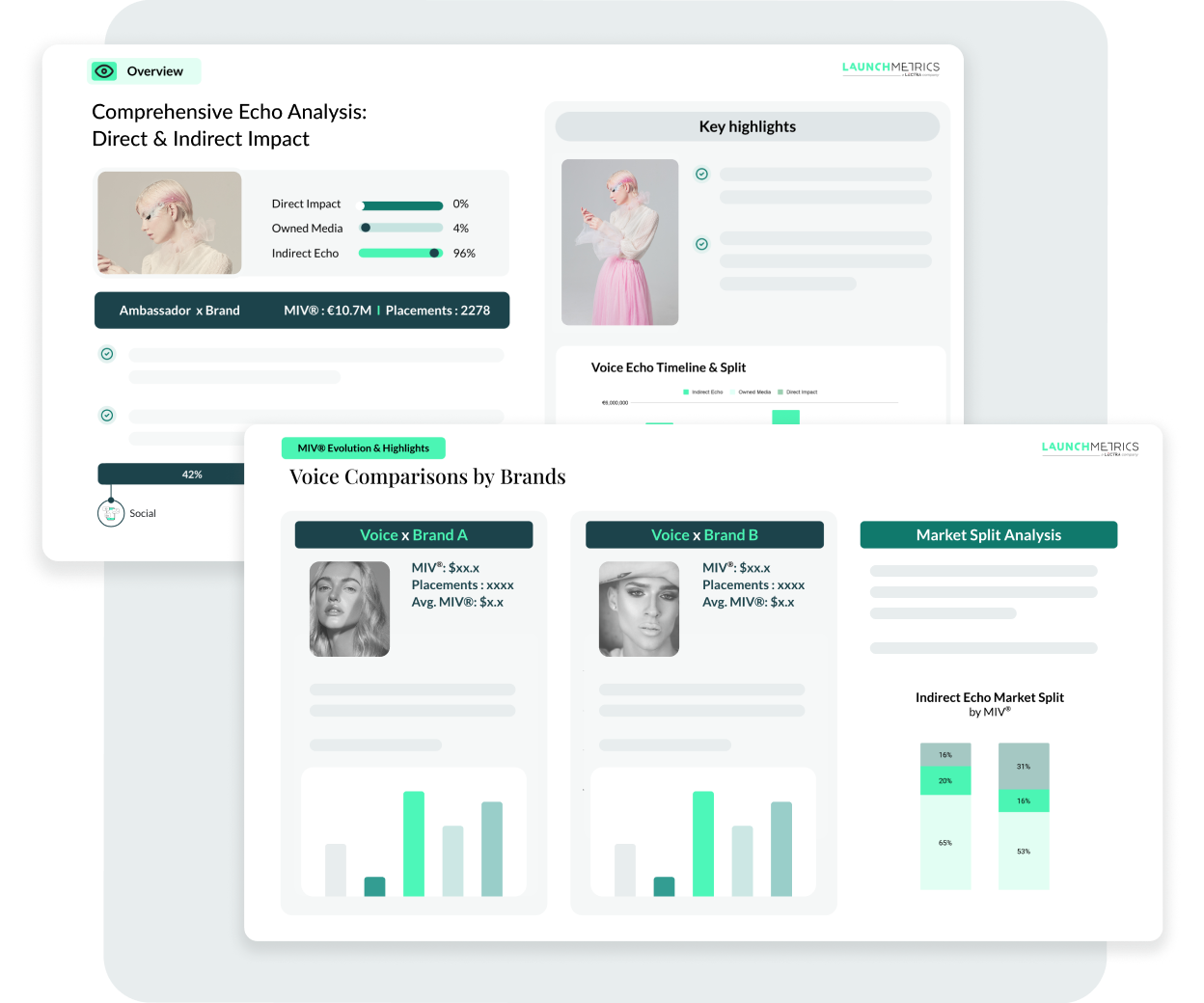
Voice Echo separates a campaign’s Direct Impact from its Indirect Echo, revealing buzz that standard metrics miss entirely.
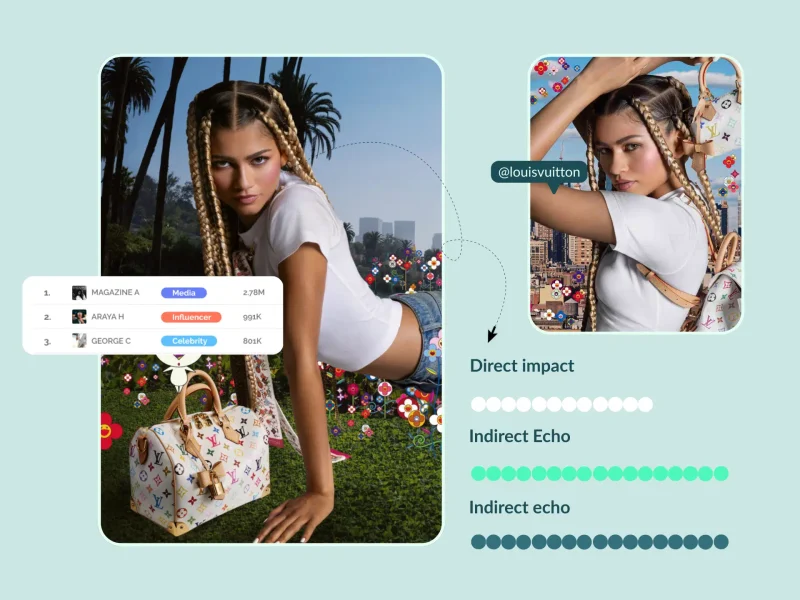
Zendaya’s Louis Vuitton partnership generated $25.3M in total MIV®, with $0 from Direct Impact, $3.7M (14.6%) from Owned and $22M (85.4%) from Indirect Echo.
Brand ambassadors play a vital role at every stage of the marketing funnel, from building awareness to driving loyalty. As a result, more brands are building ambassador marketing into every phase of their strategy. It’s a smart move: U.S. brands alone were projected to spend approximately $12.17 billion on influencer marketing in 2026, according to Statista.
However, ambassador marketing has its challenges. To do it well, brands need to work with the right talent, use cohesive messaging and implement the right tools that enable them to measure the real impact of their ambassador-led campaigns.
Drawing on insights from our Brand Ambassador Marketing Report, we’ll take you through what you need to know about ambassador marketing right now to nail your campaigns.
Influencer marketing may be the term on everyone’s lips, but a brand ambassador can be anyone who’s passionately vocal about your brand. From celebrities and media personalities to customers and employees, they act as storytellers of your brand’s narrative.
Brand ambassadors help build trust by sharing authentic content, experiences and recommendations. Unlike one-off influencer partnerships, ambassadors typically have longer-term relationships with the brand and are deeply aligned with its values and audience. They come across as genuinely caring about the brand, not just as paid promoters. That’s what makes them so powerful, especially to audiences who value authenticity above all else (like Gen Z).
Measuring the Ripple Effect of Ambassador Marketing With Voice Echo
Ambassador marketing is one of the most powerful drivers of brand visibility. Its most underestimated effect, though, is the ripple it creates.
Formal partnerships with celebrities or influencers go beyond generating likes and comments on a single post. They lead to earned media coverage, brand mentions from partners and fan-driven buzz that boosts long-term brand equity. This buzz plays out across what we call Voices—Celebrities, Traditional Media, Influencers, Partners and Owned Media, the five channels through which brand impact shows up.
For example, when an ambassador posts about a brand on their Instagram account, it generates direct impact. Meanwhile, a Celebrity or Influencer wearing the same brand on a red carpet can generate impact through other Voices posting about it—even if they don’t post about it themselves. This is what we call Indirect Echo.
What is Voice Echo?
Voice Echo is our framework designed to capture both the Direct Impact and Indirect Echo of ambassador campaigns, alongside any impact generated on the brand’s own channels. We measure this using Media Impact Value (MIV®)—a proprietary metric that assigns a monetary value to all media exposure, allowing brands to compare results across platforms and channels and more accurately gauge the ROI of ambassador marketing campaigns.
Consider Zendaya’s partnership with Louis Vuitton. Our analysis reveals that 0% of the campaign’s total $81M in MIV came from Direct Impact. Instead:
3% was driven by LV’s own accounts
97% of the value came from Indirect Echo, where buzz was generated by others in response to the partnership
As we can see, Voice Echo gives us a far-reaching view of how the campaign truly performed, well beyond what’s apparent with standard metrics. For brands, this ability to make the invisible visible is a superpower in the realm of ambassador marketing.
How Voice Echo Tagging Makes This Happen
This level of detail is possible because of Voice Echo Tagging, available within our media monitoring solution that lets teams apply custom tags to coverage based on a specific ambassador name for instance. Once a tag is set up, it can apply automatically to every new placement that matches, capturing an ambassador’s Direct posts and the Indirect buzz around them under one clean, reportable view, without building a separate feed for every campaign.
Celebrities vs Influencers: Who Drives the Most Value?
A big question for Fashion, Lifestyle and Beauty (FLB) brands is where to direct their ambassador marketing budgets: toward celebrity partnerships, influencer collaborations or both?
In reality, the choice isn’t about one being better than the other. It’s about understanding how each type of ambassador contributes to your brand goals and where their impact shows up across the funnel.
At a high level, Celebrities are widely recognized public figures (such as actors, athletes or musicians), while Influencers are digital-first creators who’ve built strong communities around niche or lifestyle-driven content. Both can be incredibly valuable as brand ambassadors, but they often serve different purposes.
Influencer partnerships are often more short-term and content-driven, designed to deliver a spike in visibility and Direct Impact through high-performing posts. This makes them a strong play for things like product launches and seasonal campaigns.
Celebrity ambassadorships, meanwhile, tend to generate a higher level of Indirect Echo. Even when a celebrity doesn’t post themselves, their association with a brand (through events, campaigns or public appearances) can lead to significant earned media coverage and social buzz. All of which builds long-term brand equity.
Remember that this is a general trend and not a rule. Influencers can also become powerful long-term brand ambassadors, especially when there’s strong alignment with the brand’s values. Our report case study for Alo, for example, shows that influencers like Kendall Jenner and Alix Earle generated more Indirect Echo for the brand than even high-profile celebrities like Taylor Swift.
So which should you prioritize, celebrities or influencers? It’s not about picking one over the other, but understanding who’s driving what kind of impact. Voice Echo helps uncover where that impact is really coming from, showing which ambassadors are delivering the most value—whether through direct engagement or indirect amplification. The ultimate goal is to build the right Voice Mix that balances both for maximum impact.
Brand Ambassador Metrics: Why Qualitative Analysis Is Key
It’s easy to focus on numbers (like reach, engagement or ROI), but the real power of ambassador marketing lies in how the talent you work with shapes the way your brand is talked about. Today, FLB brands operate in culturally rich, emotionally charged spaces where perception is everything. And that’s where qualitative insights become essential.
Think of it this way: when you partner with an ambassador, you want to expand your reach, yes—but you also want to generate the right kind of conversation. You want to invest in long-term collaborations that make your brand desirable in the eyes of consumers, deepen emotional connections and make your brand feel culturally relevant. Performance metrics alone can’t measure these outcomes.
That’s why we pair traditional KPIs with an AI-powered qualitative framework to uncover the value themes each ambassador brings to the table. This approach analyzes thousands of articles and social conversations to identify recurring ideas, themes and keywords. It reveals whether a partnership is reinforcing values like “authenticity,” “nostalgia” or “inclusivity”—or helping shift a brand’s identity into new cultural territory.
Launchmetrics’ Analyze Coverage Offers This Instantly
Analyze Coverage is the AI-powered feature that tells you what your coverage is actually saying about your brand. Filter a feed down to an ambassador and a date range, run the analysis, and it surfaces an executive summary, three to four recurring themes with impact scores, and follow-up questions worth investigating. Simply put, it turns hundreds of placements into a clear read on which values a partnership is actually reinforcing.
Some patterns are clear: product-focused themes such as “craftsmanship” or “technical innovation” remain largely in the brand’s control. But lifestyle and audience-driven values? That’s where ambassadors lead. Our analysis found that:
53% of all brand value themes were directly driven by the ambassador.
47% of brand-ambassador conversations centered on lifestyle and audience connection—values like “performance lifestyle,” “recognition,” and “emotional resonance.”
Key takeaway: Ambassadors don’t just represent a brand, they actively shape its narrative. For brands looking to reinforce or evolve their positioning, qualitative insight is essential. By understanding the deeper values ambassadors bring and measuring both direct and indirect impact, brands can make smarter, more strategic choices in their ambassador marketing.
Case Study: Aligning Brand Values With Lewis Hamilton
With more than 39 million followers, Lewis Hamilton is far more than just a Formula 1 champion. He’s a global style icon with influence that reaches across sport, fashion and culture. Known for his bold personal style and strong values, Hamilton more than proves his worth as an ambassador for brands wanting to stay culturally relevant while aligning with values like innovation, performance and sustainability.
Our report breaks down two successful campaigns from Lewis in 2024: IWC and Dior.
Voice Echo breakdown for Lewis Hamilton’s campaigns for IWC and Dior. These figures show the MIV generated in the first month of each brand ambassadorship.
Despite Lewis Hamilton not posting about the Dior menswear capsule he fronted, the campaign delivered remarkable results thanks to Indirect Echo (which accounted for 82.8% of the campaign’s MIV during its first month). Once again, this proves that a well-aligned ambassador can drive major buzz without a single post.
Meanwhile, Hamilton continues to deliver for IWC despite their relationship enduring for over a decade. In just one month, he generated over $1.2M in Direct media impact, showing that long-term ambassadorships can retain—and even grow—their influence when values and cultural relevance are maintained.
Across both partnerships, our qualitative analysis found that “Sustainability” emerged as a shared value. This reinforces the importance of understanding how each ambassador is perceived and selecting those who not only amplify reach but also embody the deeper values your brand wants to be known for.
Beyond Metrics: The Future of Strategic Ambassador Partnerships
Mastering ambassador marketing has become utterly vital for FLB brands. And, as we’ve seen, the most impactful brand ambassadors aren’t always the ones with the most reach, but the ones who stand for something that aligns with a brand’s values and vision.
As Anusha Couttigane, Head of Advisory at Vogue Business, says: “When we look at the data of which influencers generate the most engagement, we can often see that it’s not just people who are famous for being famous, but people who vocally stand for something, whether that’s representation of a shared identity or minority group, a passion for a pursuit, a lust for life, creativity, curiosity or positive change.”
To harness the full power of ambassador marketing, brands need to go beyond standard metrics. Along with MIV, tools like Voice Echo allow you to measure both direct and indirect impact, capturing the real value of a partnership, from owned content to media buzz and cultural conversation.
Just as important is pairing performance data with qualitative insight. Understanding the values an ambassador brings helps you choose partners who will not only promote your products but actively shape how your brand is perceived.
In the end, it’s about building the right Voice Mix—one that combines cultural relevance, emotional resonance and measurable results. With the right ambassadors and the right tools, your brand doesn’t just get seen, it gets remembered.
Download our Marketing Mix Optimization Guide to learn how the Voices framework helps you benchmark performance and build the right Voice Mix and ambassador selection for your brand.
Master Your Marketing Mix Optimization Through the Power of Voices
Frequently Asked Questions (FAQs) on Ambassador Marketing
Ambassador marketing prioritizes long-term, values-aligned relationships over the short-term reach of a single campaign. This means its value shows up differently, more in earned media and Indirect Echo route rather than in a single spike of engagement. To understand how that impact is built, it’s worth understanding the role each Voice plays in our Marketing Mix Optimization Guide.
The first step is identifying ambassadors already generating meaningful impact for your brand or category. Launchmetrics’ Contacts solution makes this easy with Voices built in and MIV data attached to each one. From there, use competitive benchmarking to learn how a prospective ambassador has performed for other brands, to help you validate the choice before a partnership is signed.
Popularity alone doesn’t guarantee impact. In our Alo case study, Voices such as Kendall Jenner and Alix Earle generated more Indirect Echo for the brand than global popstar Taylor Swift, despite her larger profile. Due to their alignment with Alo’s values resonating more deeply with its audience, it proves that the stronger signal is usually fit, rather than fame.
By Luna Weissman
Luna is a Content Marketing Assistant at Launchmetrics with a strong interest in fashion and digital media. She enjoys keeping up with the latest trends and exploring how content shapes conversations in the FLB space.