
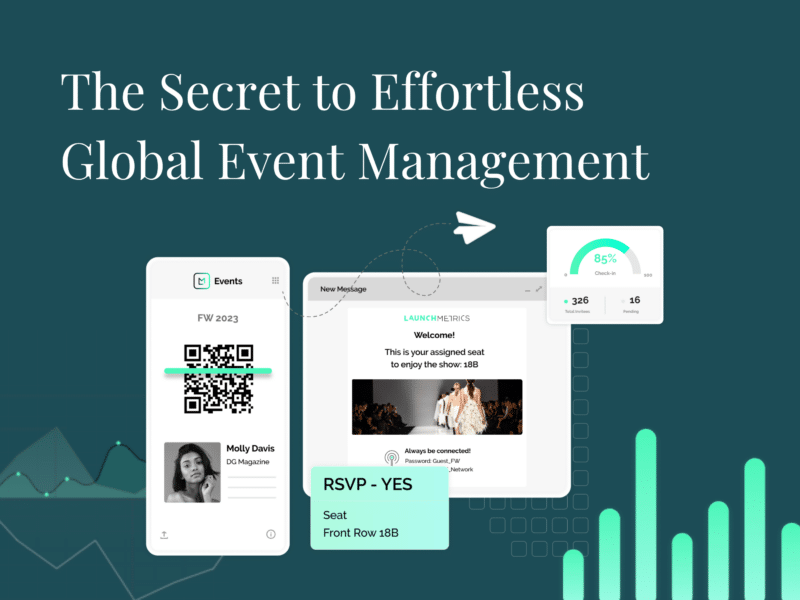
Global event management has become one of the most strategically complex challenges for Fashion, Lifestyle and Beauty (FLB) brands. With brand events growing 54% globally and attendance surging by 65%, the stakes have never been higher. From fashion weeks to intimate brand activations, managing events across markets and teams requires more than good logistics—it demands smarter tools, tighter collaboration and a unified approach from invitation to follow-up.
Effective global event management goes beyond logistical execution. It minimizes errors, ensures the right people attend and elevates the invitees’ experience—from the moment invitations are sent to the seamless on-site experience. When done right, it boosts attendance rates, improves the overall success of the event and streamlines efforts across teams by providing visibility at every touchpoint.
However, the impact of an event extends far beyond its host market. Events create a ripple effect, connecting Voices and markets globally, amplifying a brand’s reach and leaving a lasting impression across regions. Voices—including influencers, celebrities, and media—take center stage during event planning, playing a pivotal role in driving engagement and visibility. For global impact, it’s essential for each team to manage its own guest list effectively, ensuring maximum resonance and ROI in every market.
Yet, managing these efforts with dispersed teams—coordinating logistics, communication, and execution across time zones and functions—adds layers of complexity. These challenges demand smarter, more collaborative solutions to streamline workflows and ensure alignment.
In this article, we’ll explore why global events require more advanced tools to overcome these challenges and how Launchmetrics’ Events software can propel success. By optimizing planning, streamlining communication and fostering efficient team collaboration.

Heard about our new events report?
It gives a deep-dive into how brands are winning in their events strategy today.
The Challenges of Global Event Management
Organizing a successful event is a complex process due to the logistics and coordination, but when its impact lies at the global scope of brands, the challenges grow exponentially. With teams and invitees spread across different regions, seamless coordination becomes a critical yet difficult goal to achieve. Misalignment in communication, varying time zones and the need to cater to diverse market expectations are just a few of the obstacles to event planning.
One of the most pressing challenges is fragmented communication. With team members often relying on scattered tools and spreadsheets with guest lists, it’s easy for vital information to be lost or misunderstood leading to logistical errors or missed opportunities. These inefficiencies not only consume time and resources but also affect the attendee experience, impacting the brand image.
Time zone differences further complicate collaboration by jeopardizing real-time decision-making and leading to missed deadlines. Coupled with managing a global guest list, coordinating RSVPs and ensuring personalized communication for attendees, the process can quickly spiral into chaos without the right tools in place, resulting in fragmented workflows and inefficiencies.
In addition to logistical challenges, brand consistency can be at risk if event management processes aren’t streamlined to ensure team alignment. Each region may have unique goals and audience preferences, making it essential to coordinate efforts while allowing for localized execution. Achieving this balance requires transparency and collaboration across all teams involved.
These complexities highlight why traditional event management approaches no longer suffice. To overcome these hurdles, brands need smarter, purpose-built solutions that can centralize planning, simplify workflows and enhance team collaboration. By leveraging such tools, brands can streamline communication, improve operational efficiency and ultimately create impactful global events that resonate across markets.
Leveraging Technology for Global Event Management Success
Given these challenges, how can brands navigate the intricacies of global event management? The answer lies in adopting the right technology.
Brands using event management technology see a 59% invitee-to-attendee rate compared to 44% for those without. (The Event Renaissance Report, 2026)
Launchmetrics Events is the industry-leading platform designed to streamline the planning and execution of in-person, digital and hybrid events, ensuring efficiency, collaboration and exceptional guest experiences.
Events are opportunities to shape your brand image and build meaningful connections with your Voices. With this in mind, Launchmetrics Events offers a comprehensive suite of features tailored to elevate your event’s success rate while simplifying workflows for global teams. Here’s how the tool can redefine your event management process:
Key Features and Benefits of Launchmetrics Events
- Effortless Invitee Management: Import existing guest lists or create new profiles directly within the platform to develop the ultimate invitee list. Teams can collaborate seamlessly while keeping sensitive contact details private, ensuring data security across departments. With custom fields for enhanced organization and real-time RSVP updates, you’ll have full visibility of your guest list. Additionally, access past attendance metrics to refine future strategies—critical for proving ROI.
- Streamlined Invitations and RSVPs: Launchmetrics Events simplifies the creation of customizable digital and physical invites, integrating unique barcodes or RFID chips for each attendee to facilitatea smooth check-in process. Pre-event RSVP tracking enables better forecasting, while real-time invitation status updates empower teams—whether on-site or abroad—to refine guest lists and execute timely follow-ups with agility.
- Digitized and Collaborative Seating Charts: Manual seating arrangements slow down processes and hinder collaboration. Launchmetrics Events allows teams to collaborate when creating and modifying seating charts effortlessly—even on the day of the event. (👋🏽 Discover more about Launchmetrics’ groundbreaking collaborative feature release here.)
- Seamless Check-in and Enhanced Guest Experiences: Reduce check-in wait times by scanning barcodes or RFID-enabled invites using the Events mobile app, which provides real-time access to RSVP statuses and updates. For VIP guests, profile pictures enhance recognition, ensuring a seamless experience. Live updates keep teams informed, enabling them to manage last-minute changes effortlessly.
- Exceptional Virtual Event Experiences: Extend your brand’s impact with pre-recorded or live-streamed events hosted in an exclusive, invite-only environment. With a customizable digital event page, brands can create a virtual experience as engaging as an in-person one.
- Timeslots to Manage Guest Flow: Instead of managing one open arrival time, brands can create structured time slots with attendee limits and allow guests to choose the option that works best for them. This is integrated into the event workflow, and is easy to set-up when it comes to events such as showrooms, press previews and more. (👋🏽 See how Timeslots work here.)
Proven Success with Launchmetrics Events
The success of the platform speaks for itself with impressive statistics that highlight its impact on the FLB industry:

By offering unparalleled features and benefits, Launchmetrics Events empowers brands to overcome the complexities of event management while delivering a consistently exceptional experience to attendees. With this tool, brands can achieve new levels of efficiency, collaboration and impact, transforming events into powerful drivers of success. The transformative results are best showcased in the DLX case study, highlighting how the brand leveraged Events to achieve outstanding outcomes.
Collaboration: The Game-Changer for Global Event Management
The crown jewel of event management lies in collaboration. As explored earlier, a global approach to events requires synchronized efforts across departments, teams and regions. The ability to collaborate seamlessly at a global scale offers brands a competitive advantage by streamlining operations, enhancing coordination and ensuring every detail is executed flawlessly.
Seating adjustments occur four times more frequently than guest list changes. (The Event Renaissance Report, 2026)
With this in mind, Launchmetrics has introduced a groundbreaking feature—Events Collaboration—to its Events platform, revolutionizing the way brands manage their events. This advanced functionality allows teams to work together efficiently while maintaining structure and security through permission-based roles. Let’s dive into how this innovative feature elevates event management.
What is Events Collaboration?
The new Events Collaboration feature is designed to enable multiple departments to work on the same event while maintaining ownership of their individual responsibilities. Each department can manage its own invitee list and event-related tasks without disruptions from other teams.

To keep things organized, three distinct roles ensure structure:
- Event Owners: Full control over event-level details, including settings, seating charts and invitee management across all departments. They also manage permissions and privacy for collaboration.
- Event Collaborators: Limited access to event-level details. They can manage their own contacts and tasks but cannot alter global event settings.
- Contact Owners: Authority over their department’s invitees, ensuring accurate and secure contact management.
Key Features of Events Collaboration
- Streamlined Collaboration: Teams can work on the same event while maintaining ownership of their tasks, ensuring efficiency and preventing overlap.
- Enhanced Privacy Controls: Sensitive invitee information remains protected, with customizable visibility settings that balance transparency and confidentiality.
- Role-Based Permissions: Clearly defined roles ensure teams can contribute effectively without disrupting the event’s overall structure.
- Seating Chart Management: Event Owners oversee seating assignments, while Collaborators manage only their department’s invitees, maintaining clarity and organization.
- Unified Check-In and Reporting: Teams can manage check-ins seamlessly, with reporting access tailored to privacy and role-based permissions.
Collaboration is the foundation of global event success, but without clear boundaries and permissions, it can lead to chaos. Launchmetrics’ Events Collaboration feature creates a framework where teams can collaborate effortlessly while safeguarding structure, order and privacy.
Effective collaboration isn’t just a convenience—it’s a necessity. By leveraging this feature, brands can unlock new levels of efficiency, coordination and success in event management.
👋🏽 Want to know where your operations stand today? Our events scorecard is a great way of self-evaluating your event set-up!
Scale Your Global Event Management Strategy
As live experiences become more important for building awareness and strengthening audience relationships, brands are under growing pressure to deliver events that feel seamless from invitation to follow-up.
The Event Renaissance explores how leading Fashion, Lifestyle and Beauty brands are scaling across more event formats, teams and audiences while maintaining smooth operations, stronger guest experiences and measurable impact.
From fragmented workflows and guest coordination challenges to last-minute changes and attendance management, the report uncovers the operational realities brands face today — and how smarter event technology, including capabilities like Timeslots, RFID and centralized guest management, is helping teams run more connected and flexible events at scale.
The Events Renaissance Report 2026
Learn how brands are making their events win today.
Frequently Asked Questions (FAQs) on Global Event Management
Global event management is the process of planning, coordinating and executing events across multiple markets, regions and teams. For Fashion, Lifestyle and Beauty brands, this spans everything from Fashion Week shows and product launches to VIP dinners, press days and cultural exhibitions, each requiring different audiences, workflows and success metrics.
What was once an occasional marketing activation has become a continuous global program. As events increase in frequency and complexity, brands need centralized tools, shared visibility and real-time collaboration to manage guest experiences consistently across every market.
Physical experiences have rebounded because brands are facing a growing attention problem. Audiences now spend an average of 13 hours a day engaging with media, yet attention is increasingly fragmented across platforms and devices.
In-person experiences stand apart because they create focused, high-attention moments that digital environments struggle to replicate. According to data from our latest report (The Event Renaissance), brand events have grown 54% globally since 2019 and attendance has surged by 65%. This is pivotal for brands, as research also shows that a 10% increase in focus is associated with a 17% increase in spend, making live experiences one of the most effective ways to build stronger consumer engagement and lasting brand impressions.
Measuring the ROI of a global event means looking beyond attendance alone. Leading brands now evaluate how an event performs across media coverage, influencer amplification, social visibility and long-term brand impact to understand what the experience actually generated after guests leave.
Brands like Paul Smith approach events as moments that continue living across digital channels through content, PR coverage and audience engagement. Rather than measuring success only by who attended, the focus shifts toward understanding how the event contributed to wider brand visibility and future strategy.
Metrics like Media Impact Value® (MIV®) help brands assign a monetary value to every placement, from media articles to influencer posts and social content. This creates a consistent way to compare performance across Voices, channels and markets while helping teams understand which events, guests and activations generated the strongest impact.
Event performance data can then be used to refine future guest lists, strengthen PR planning and benchmark results more accurately over time. You can see how this looks in our Paul Smith masterclass.

By Natalia Cornejo


