
TL;DR
- US Open 2026 generated $960.5M in Media Impact Value® across the tournament and its surrounding news cycle.
- Polo Ralph Lauren led all Fashion, Lifestyle and Beauty (FLB) brands tracked around the tournament with $5.3M in MIV, built on its two-decade role as the event’s Official Outfitter.
- Nike followed with $4.7M, more than half of it tied to Aryna Sabalenka, who out-earned both singles champions in Celebrity MIV despite being the runner-up in the women’s final.
- Material Good and Oura, each anchored to a single breakout star, converted individual bets into two of the tournament’s highest-value returns.
- Content creators reshaped the conversation: Mickey Blank alone generated $10.1M in MIV, more than the next nine Influencer Voices combined.
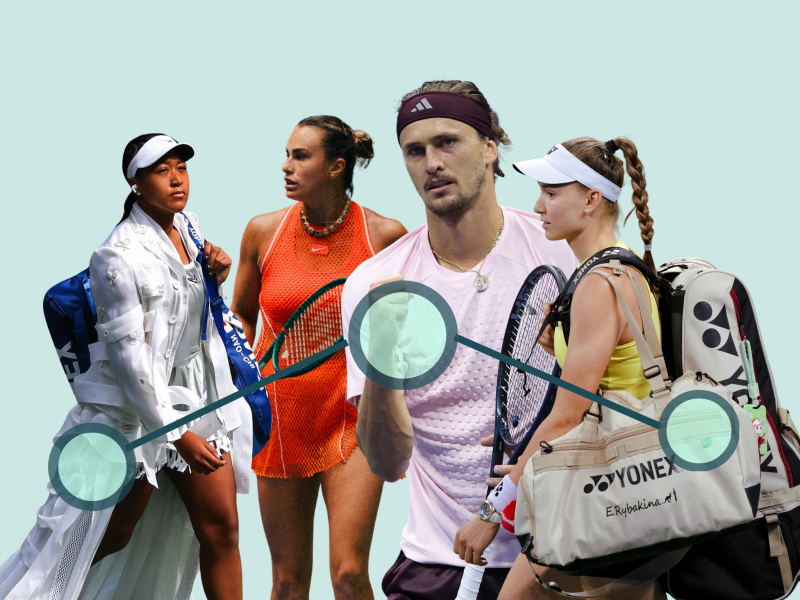
Flushing Meadows closed out the Grand Slam calendar this year with two finals that broke in opposite directions. Alexander Zverev denied Ben Shelton’s bid to end a 23-year wait for an American men’s champion, while Elena Rybakina overcame Aryna Sabalenka to lift the trophy and claim the world’s No. 1 ranking. Off the court, the tournament’s style conversation played out across official uniforms, courtside guests and a fast-growing wave of credentialed content creators.
For marketing and PR professionals, this makes the US Open one of the year’s most instructive cultural moments to measure. According to Launchmetrics’ Media Impact Value® (MIV®), which assigns a monetary value to every brand placement across online, social and print, spanning regions and Voices such as Celebrities, Traditional Media, Influencers, Partners and Owned Media, the tournament and its surrounding coverage generated $960.5M in MIV between August 23 and September 20, 2026.
In this blog, we break down which brands converted that moment into measurable impact and how they did it.
US Open 2026 By The Numbers
The US Open conversation found its biggest stage on social. Social channels generated $729.8M in MIV, accounting for 76% of the tournament’s Channel Mix, while online coverage contributed the remaining $230.7M. Instagram took the lead at $241.8M, narrowly ahead of online media coverage at $229.4M and Facebook at $208.1M. YouTube followed at $180.1M, with TikTok adding $68.2M.
Looking at the Voice Mix, Traditional Media carried nearly three out of every four dollars of value, generating $716.8M (74.6% of total MIV). Partners contributed $145.7M (15.2%), Influencers added $52.6M (5.5%), Celebrities generated $43.4M (4.5%) and Owned Media rounded out the mix at $2.0M (0.2%).
Media outlets and the tournament’s own channels led individual Voices: the official US Open account generated $106.4M, followed by ESPN at $56.0M, CBS Sports Golazo at $23.1M and Tennis Channel at $19.9M.
Interestingly, the Celebrity conversation was not won solely on sporting performance. Sabalenka topped the leaderboard with $4M in MIV, ahead of Carlos Alcaraz ($2.8M) and Taylor Townsend ($2.6M). Naomi Osaka also featured among the leading Celebrity Voices at $2M, while singles champions Alexander Zverev and Elena Rybakina generated $1.7M and $1.4M respectively.
The Influencer conversation was dominated by one breakout creator. Content creators reached the US Open at scale for the first time this year, and Mickey Blank, known for candid street-style video of celebrities around New York, was the breakout name of the tournament: he generated $10.1M in MIV across 293 pieces of content. That’s more than the combined total of the next nine highest-earning Influencer Voices, including Antonela Roccuzzo ($1.1M) and Katie Feeney ($832.7K).
Polo Ralph Lauren: $5.3M MIV as the Tournament’s Institutional Face
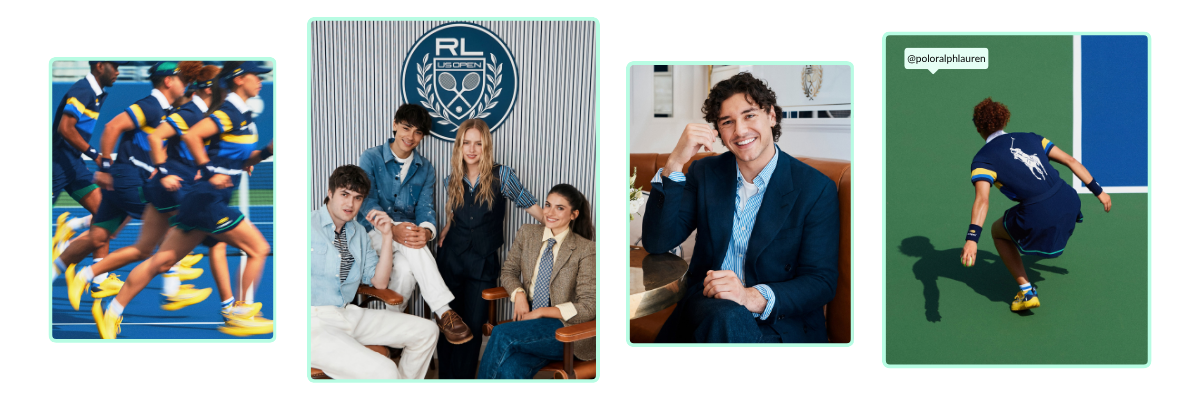
Ralph Lauren led all fashion, jewelry, beauty and accessories brands tracked around the tournament with $5.3M in MIV. The value reflects the role of the brand, rather than a single moment; serving as the US Open’s Official Outfitter since 2005, the partnership recently extended through 2032. This year’s activities included a new commemorative collection, a Nordstrom pop-up in Manhattan and Pink Pony Day on September 5 in support of cancer research.
Where other brands built value around a single athlete, Ralph Lauren’s return came from consistent visibility spread across the full three weeks of coverage, a reminder that owning a tournament’s visual identity can perform just as strongly as any individual celebrity partnership.
The Sabalenka Effect: How Nike, Gucci and Material Good Won Big
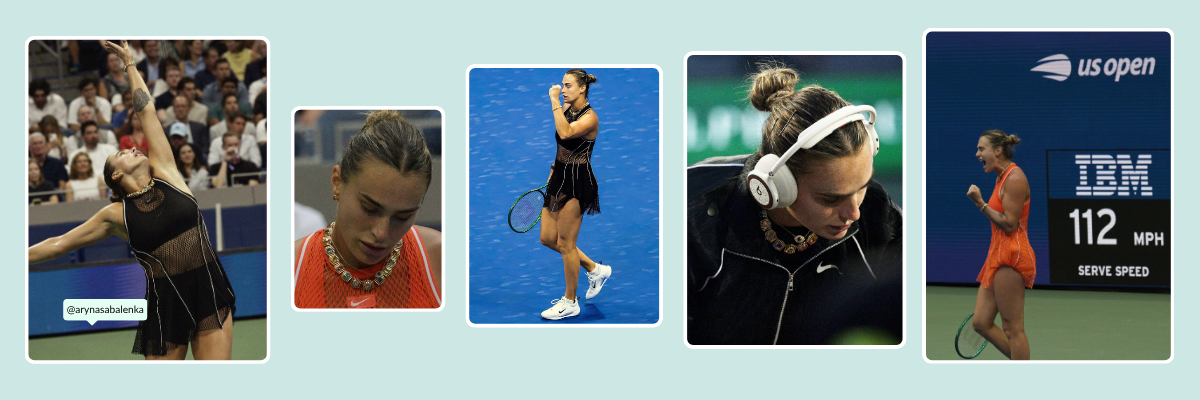
Aryna Sabalenka remained the tournament’s most valuable athlete for various FLB brands.
Material Good, a jewelry label, generated $4.5M in MIV, with $4.4M of it (99% of the brand’s total) tied directly to Sabalenka across 326 placements. A similar pattern appeared for Gucci: Sabalenka generated $2.2M of the brand’s $3.6M in MIV, again driving more than half of its impact around the tournament.
On the other hand, Nike’s strategy was broader, spanning a roster that included Carlos Alcaraz and Naomi Osaka. However, Sabalenka still accounted for more than half of its $4.7M total, generating an impressive $2.8M across just 33 placements. This averaged $83.6K in MIV per placement.
All three brands followed different strategies, from Material Good’s near-total concentration around one athlete to Nike’s wider player roster. Yet Sabalenka emerged as the strongest driver for each, showing that the athlete generating the greatest media value is not always the tournament winner.
Oura’s Coco Gauff Partnership Delivered $4.1M
In addition to being a tournament sponsor, Oura followed closely behind at $4.1M, its tournament-high value built almost entirely on its association with Coco Gauff.
Gauff reached the quarterfinals, but the value surrounding her extended beyond her final result. Her run also created visibility for Rolex and New Balance, showing how sustained attention around the right athlete can support several brand relationships at once.
This concentrated strategy demonstrates the ability to produce returns comparable to long-standing tournament partnerships.
Rolex, Chanel and Cactus Jack Took Different Routes to Visibility
Beyond the leading brands, our data revealed several ways brands were able to win conversations around the tournament.
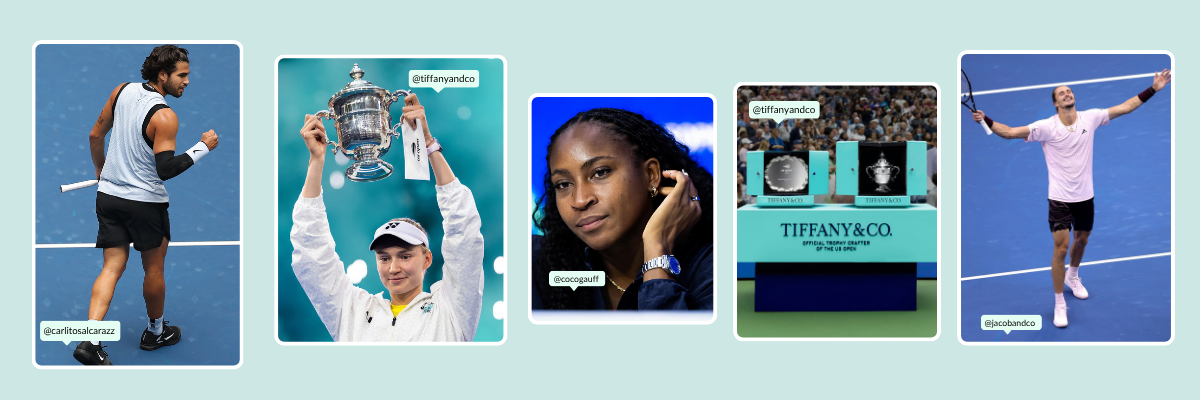
Some brands appeared repeatedly through multiple athletes. Rolex generated $2.3M in MIV through athletes Ben Shelton, Coco Gauff and Carlos Alcaraz, while Yonex earned $2.4M through its equipment relationships with Shelton and Elena Rybakina. Jacob & Co generated $1.6M, driven largely by Zverev’s championship run, while Adidas, also tied to Zverev, generated $3.1M.
On the other hand, Naomi Osaka’s off-court wardrobe added up in smaller pieces across four labels: Who Decides War ($1.1M), KidSuper ($691.7K), Monse ($100.0K) and Dolce & Gabbana ($69.9K), a rotation that favored independent and emerging designers over a single dominant partner.
Other brands used the tournament as a point of cultural crossover. Cactus Jack generated $2.2M through its association with Alcaraz, with 376 placements carrying Travis Scott’s label into the tennis conversation.
A smaller number of brands won through a single high-profile moment. Chanel generated $1.8M in MIV, nearly all of it tied to Michelle Obama’s courtside appearance. The result exceeded several brands with a more sustained presence across the tournament, showing the value one culturally relevant guest can create.
Elsewhere, official partnerships offered an alternative route. Tiffany & Co generated $570K as the maker of the tournament trophies, Dove earned $639.8K as an official partner and Lacoste added $559.2K through its hospitality activation with The Plaza. Sporty & Rich also generated $198.3K through its Cadillac capsule collection.
Across these examples, it’s clear brand exposure can come from different sources: athlete relationships, cultural moments, official partnerships and fashion collaborations. Yet, the strongest results came when a brand gave audiences a clear reason to connect their presence with the tournament.
Data Highlights
- Star power does not require the trophy. Sabalenka out-earned both singles champions in Celebrity MIV, and Material Good and Oura built two of the tournament’s highest brand totals almost entirely around athletes who did not win. Emotional buy-in with fans, not the scoreline, is what continues to move value.
- Institutional presence and individual bets both work, on different timelines. Ralph Lauren’s value came from a role held for two decades and spread across the full field. Material Good and Oura show that a single relationship, placed with the right athlete, can produce comparable returns in a fraction of the time, with more risk if that athlete’s run ends early.
- Content creators are now a line item of their own. Mickey Blank’s $10.1M shows how far the credentialed creator program at this year’s tournament moved the needle, outperforming every other Influencer Voice by a wide margin and signaling that brands should be tracking individual creators, not just the Influencer Voice as a category.
What This Means for the Rest of the Season
US Open 2026 shows a tournament where value followed both consistency and precision: brands that showed up every year and brands that placed a single well-timed bet both found ways to win the conversation. As the fall calendar shifts into fashion week season, that same tension between institutional presence and concentrated star power is likely to define the next set of brand rankings.
To see how these dynamics play out in real time across New York, London, Milan and Paris, explore Launchmetrics’ Fashion Week Visibility Index, the real-time ranking of Fashion Week’s most talked-about brands by press and by LLMs.

By Ioana Pop


