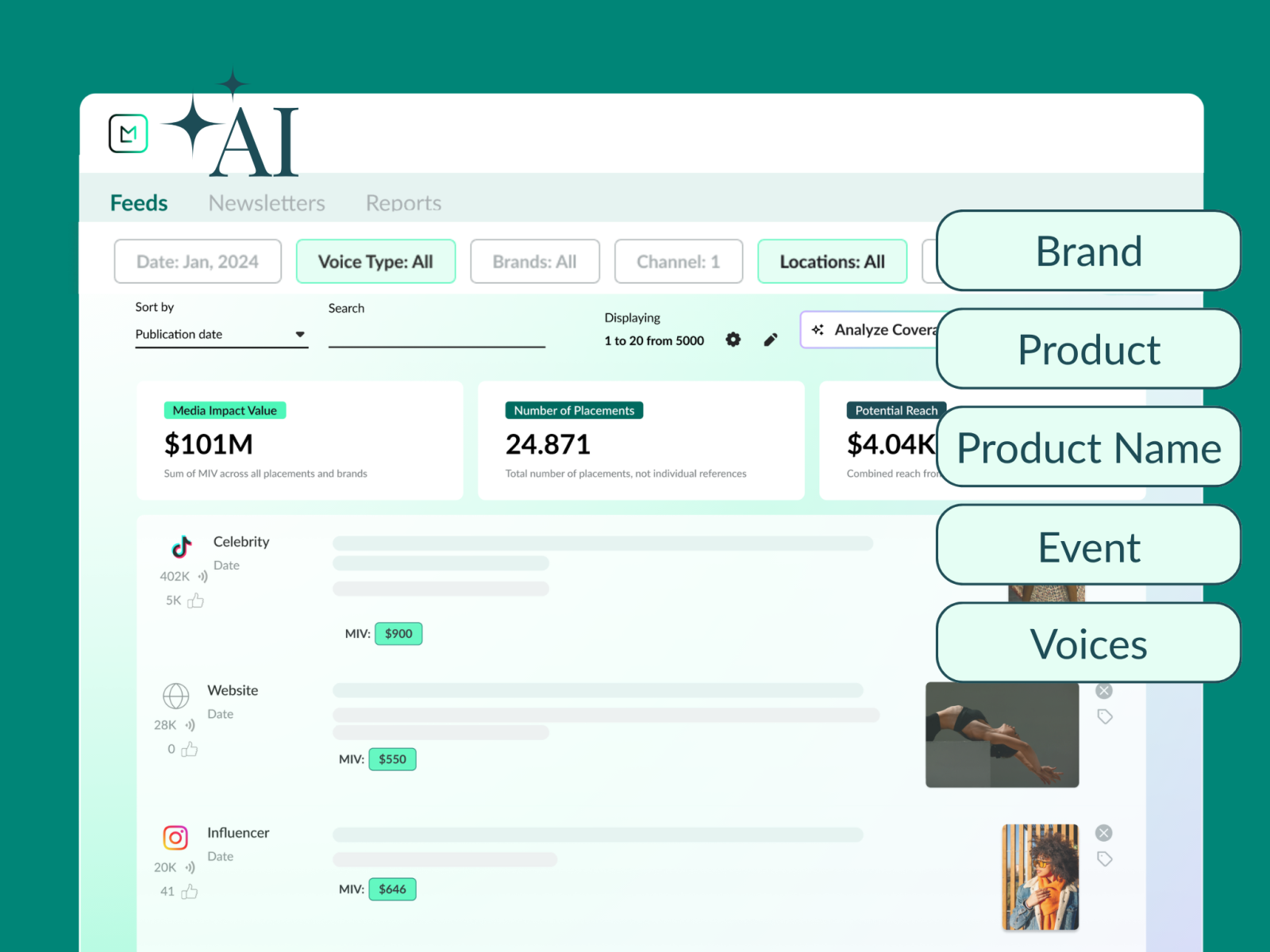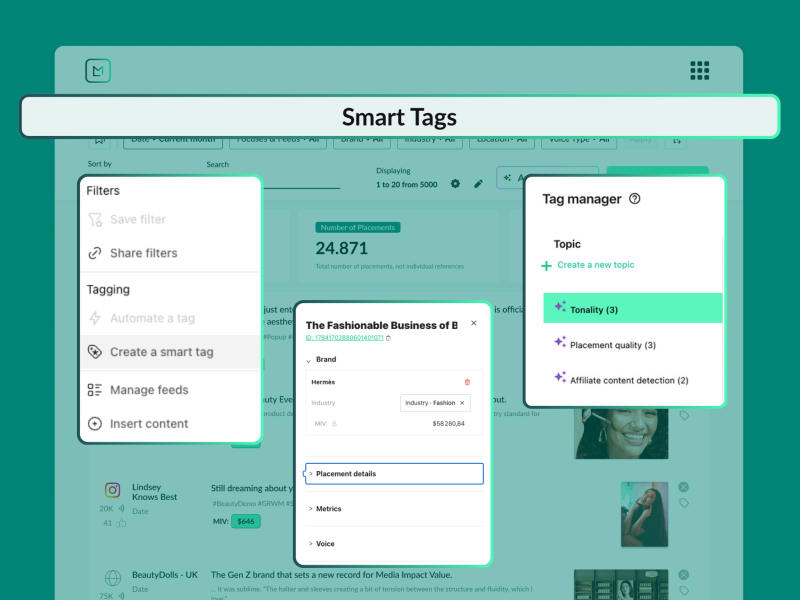
As part of our growing AI offering, we recently introduced Analyze Coverage to help users uncover the common themes and narratives within their coverage. Our latest update, Smart Tags, builds on this by enabling brands to track the qualitative themes that matter to them over time.
Launchmetrics already offers both manual and automated tagging based on defined terms and product categories. Smart Tags extend this capability by using AI to read each placement and apply tags based on what the content means, rather than words it contains. This captures the qualitative context behind your coverage, helping you to understand what is being said around your brand, campaigns and activities, in every language.
For example, you can track how sustainability is being framed or whether a campaign has landed, even when the same idea is shared across different languages and markets.
By automatically applying these tags to new coverage, Smart Tags make qualitative analysis an ongoing and measurable part of brand performance.
How Smart Tags Work
Launchmetrics configures Smart Tags based on what your brand wants to track and be associated with. Once live, it uses AI to read your coverage and determine which placements match these themes and automatically applies the relevant tag across languages. This removes the need to manually review and tag every placement.
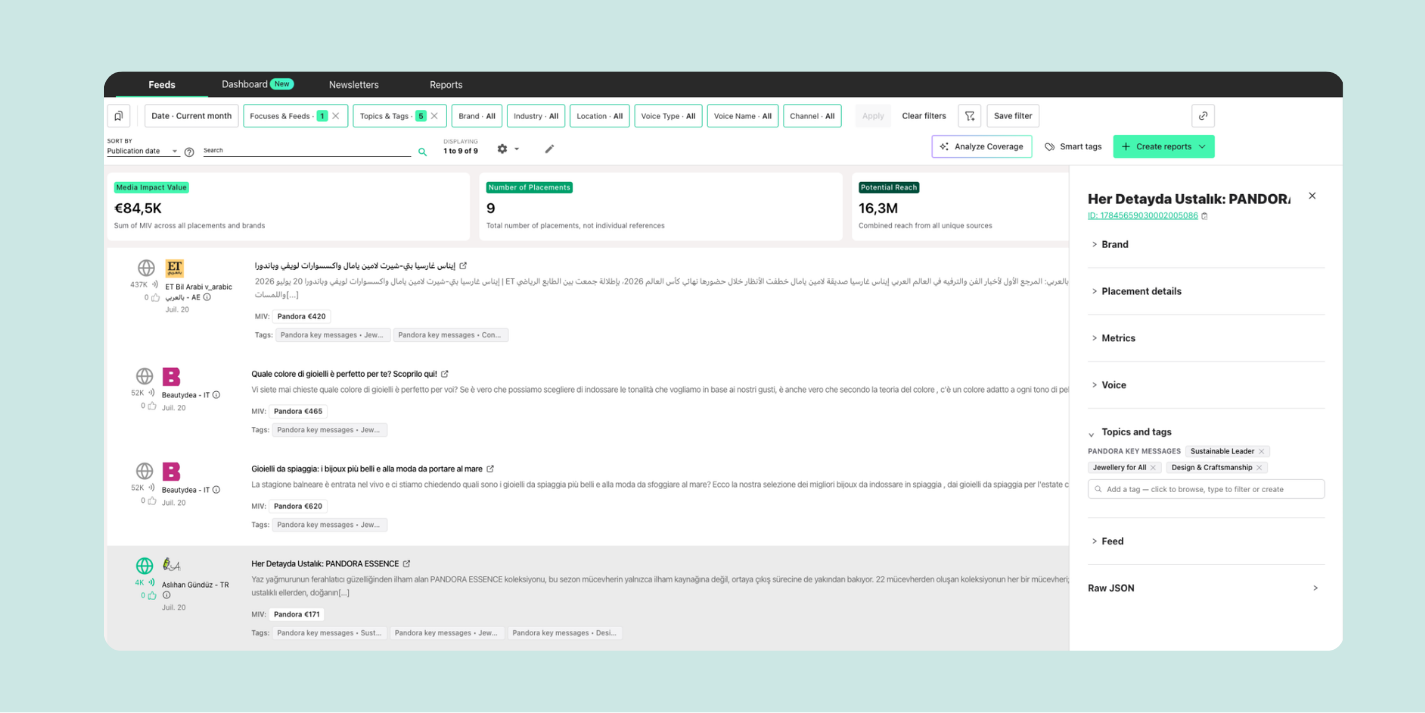
Smart Tags can be found on placement cards alongside your existing tags, with an AI badge that shows which tags were applied using AI. You can also filter your feed by a Smart Tag, use it within your reporting workflows and when needed, manually add or remove tags from individual placements.
Thanks to this new feature, users can now easily:
- Track brand pillars, campaign messages and coverage narratives consistently
- Measure the volume and Media Impact Value® (MIV®) generated by each theme
- Gain a qualitative Share of Voice—measure the percentage of your coverage being associated with that themes, monitor how to develop overtime and compare with competitors
Note: Smart Tags are even more powerful when paired with other filters to hone into what you’re looking to determine from your coverage. Let’s see how this can look in the example below.
Use Case: Measuring Whether a Campaign Message Landed Between Different Markets
A fashion marketing lead launches a global campaign intended to position the brand around self-expression and individuality. While the campaign generates strong MIV, the team needs to understand whether the message is landing consistently across its target markets: APAC and the U.S.
By pairing Smart Tags with region and channel filters, she can compare just how frequently the self-expression theme appears within each market and whether this is gaining more traction across its online Media coverage or Influencer social coverage. The analysis shows that the coverage across APAC reinforces the campaign’s self-expression message, while coverage in the U.S. appears to focus more heavily on the collection and its products.
The marketing lead can identify where the campaign narrative is landing, where it is being lost and re-strategize their investment into particular Voices to help amplify the intended message.
Start Tracking the Themes That Matter to Your Brand
Smart Tags help you move beyond what your coverage mentions to the narratives, themes and meaning behind your coverage. Whether you want to track campaign messages across markets, monitor how your brand narratives are developing over time or simply want to compare the themes associated with your brand against competitors, Smart Tags make qualitative insights possible and measurable at scale.
- Already using Launchmetrics? Speak to your Customer Success Manager today.
- New to Launchmetrics? Request a demo to see how Smart Tags fit into our wider AI-powered intelligence for brand performance.

Explore How AI Works Within Our Brand Performance Cloud
For smarter and more in-depth insights into your marketing and PR activities.

By Pawandeep Kaur